
By 2026, the global aluminium extrusion industry is undergoing a major structural shift. Buyers who once relied heavily on a few traditional manufacturing regions are now actively diversifying their supply chains. At the center of this shift is India, rapidly emerging as a global aluminium extrusion hub, particularly...
By 2026, aluminium manufacturing in India is no longer defined only by cost competitiveness. It is defined by capability, scale, precision, and sustainability. India has moved from being a largely domestic supplier to becoming a strategic global...
Far from being just a lightweight alternative to steel, aluminium has evolved into a strategic engineering material that enables scale, speed, sustainability, and long-term performance. Governments, EPC contractors, OEMs, and industrial buyers increasingly...
By 2026, aluminium is no longer just a lightweight alternative to steel. It has become a strategic material driving global manufacturing, infrastructure development, clean energy transition, mobility innovation, and advanced industrial engineering...
In an era of globalization and technological advancement, industries are no longer confined by borders. Clients from automotive, construction, aerospace, renewable energy, and industrial sectors demand high-quality aluminium profiles that comply with international standards. Meeting...
In today’s world, sustainability is no longer a choice but a necessity. Industries across the globe are shifting towards the circular economy model, which focuses on reducing waste, recycling materials, and promoting sustainable practices. In this context, aluminium has emerged as a key material for the...
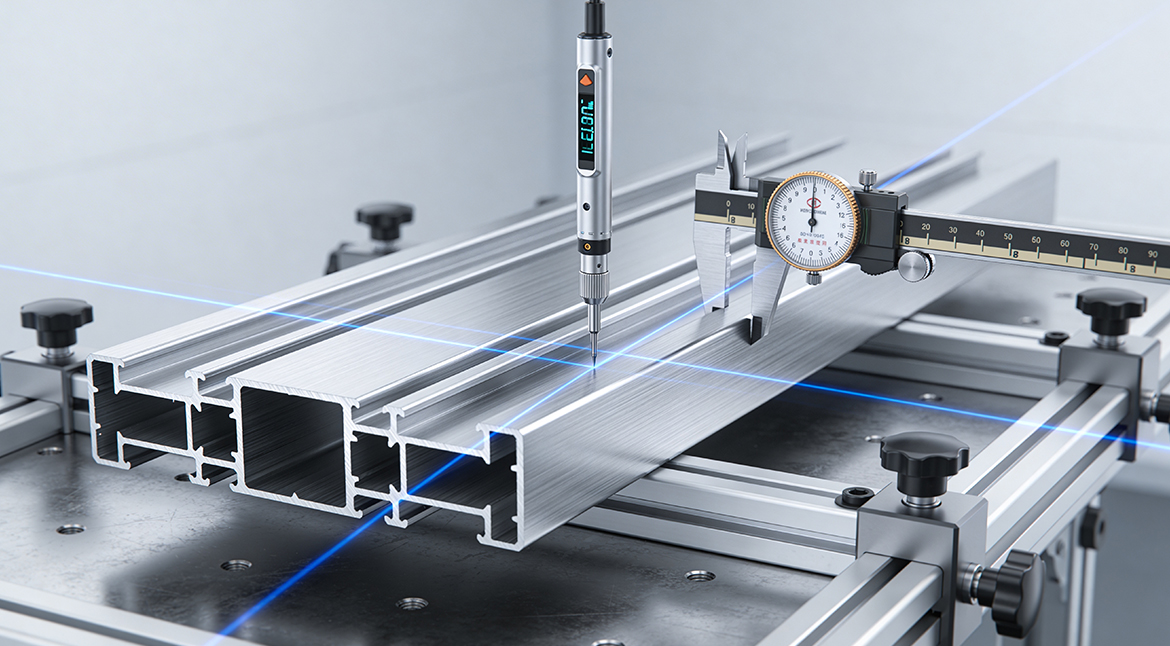
In the world of aluminium extrusion manufacturing, achieving precision and consistency is critical for delivering high-quality, reliable products. One of the most important aspects of this process is tolerance control. Tolerance refers to the allowable deviation from specified dimensions in a product...
The industrial machinery sector is undergoing a paradigm shift with the adoption of lightweight materials to enhance efficiency, performance, and sustainability. Aluminium has emerged as a preferred material in this transformation due to its lightweight properties, high strength-to-weight ratio...
In today’s highly competitive industrial landscape, one-size-fits-all solutions no longer suffice. Businesses across various sectors require tailor-made products that meet their unique specifications and operational requirements. Customization has become a critical factor in...
In today’s interconnected world, businesses are no longer confined by borders. The demand for high-quality aluminum solutions is growing across industries such as automotive, construction, aerospace, renewable energy, and industrial machinery. To succeed in this competitive global market, it is essential...