
Introduction: Why the Die Determines the Destiny of an Aluminium Profile
In aluminium extrusion, machines may provide the force, and billets may supply the metal, but the die defines the outcome.
By 2026, global buyers increasingly understand that extrusion quality is not driven by press capacity alone. It is driven by precision die manufacturing. The die governs metal flow, dimensional accuracy, surface finish, extrusion speed, and consistency across batches.
For complex, large, and high-tolerance aluminium profiles, the die is the single most critical component in the entire extrusion process.
This blog explores:
- Why die manufacturing has become a strategic capability
- How die design and machining influence extrusion quality
- The relationship between dies, tolerances, and surface finish
- Common die-related failures and how they are prevented
- What buyers should evaluate when assessing a supplier’s die capability
Understanding the Role of Dies in Aluminium Extrusion
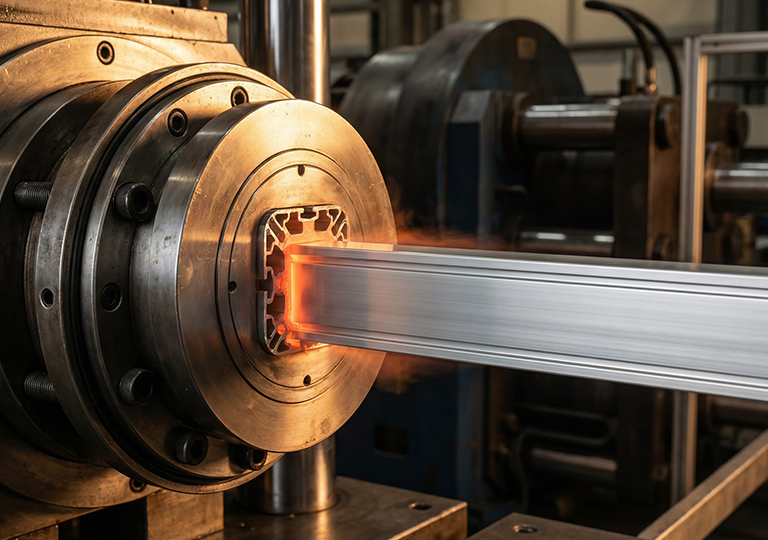
What an Extrusion Die Really Does
An aluminium extrusion die is not just a shaped opening. It is a precision flow-control system.
The die:
- Directs aluminium metal flow
- Balances pressure across the profile
- Controls wall thickness and geometry
- Forms weld seams in hollow profiles
Any imbalance or imperfection in the die translates directly into profile defects.
Why Die Precision Matters More in 2026
Modern aluminium profiles are:
- Wider and heavier
- More geometrically complex
- Used in structural and safety-critical applications
As complexity increases, the margin for error shrinks. Even microscopic inaccuracies in die machining can cause:
- Dimensional deviation
- Surface defects
- Internal stress accumulation
Precision die manufacturing has therefore become a core competitive advantage, not a support function.
Key Elements of Precision Die Manufacturing
Die Design Engineering
Precision begins at the design stage.
Advanced die design considers:
- Profile geometry and wall thickness variation
- Balanced metal flow paths
- Bearing length optimization
- Alloy-specific behavior
Modern die design is often supported by:
- Flow simulation tools
- Process modeling
- Historical performance data
This reduces trial-and-error during production.
Die Material Selection and Heat Treatment
Die performance depends heavily on:
- Die steel quality
- Proper heat treatment
High-quality die steels offer:
- High wear resistance
- Thermal stability
- Resistance to deformation under pressure
Improper heat treatment leads to premature wear, distortion, and inconsistent extrusion results.
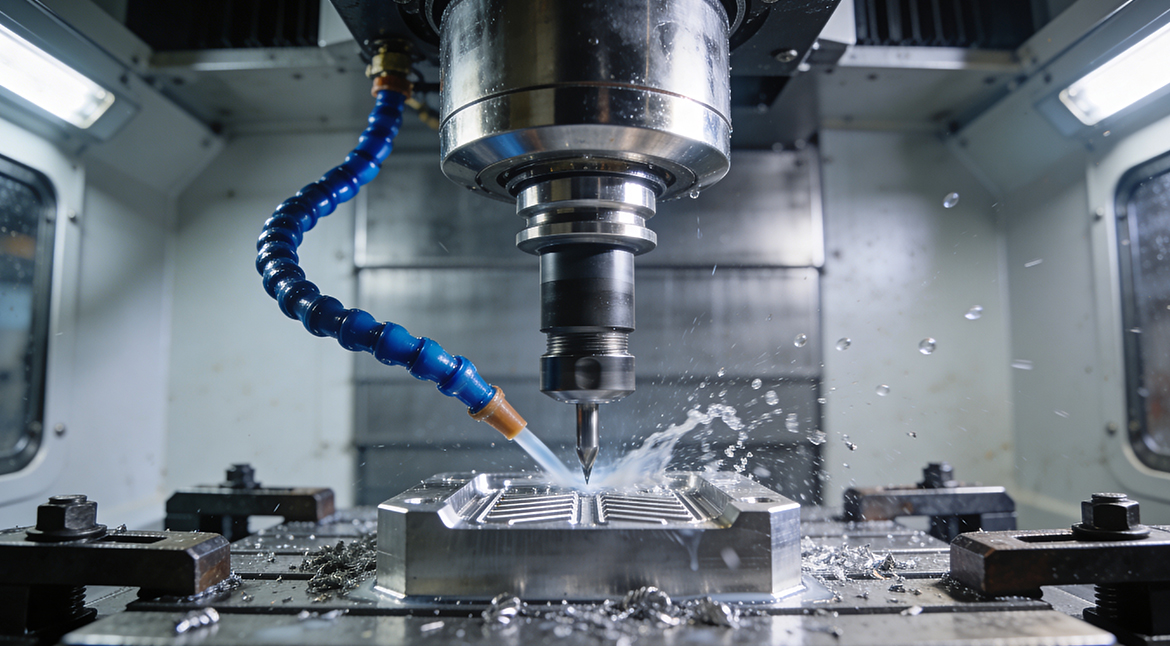
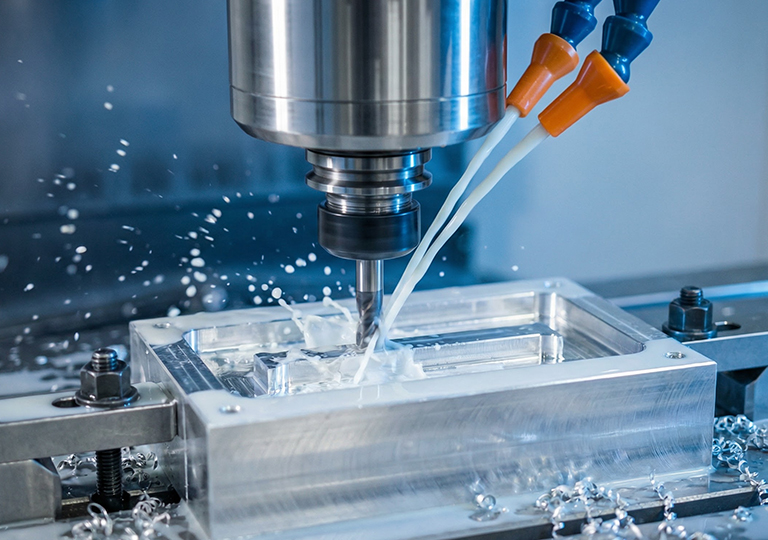
Precision Machining and Finishing
Modern dies are manufactured using:
- High-precision CNC machining
- Tight dimensional control
- Fine surface finishing
Precision machining ensures:
- Accurate bearing lengths
- Smooth metal flow
- Reduced friction
Surface finishing directly impacts extrusion speed and profile surface quality.
How Dies Influence Tolerances and Dimensional Accuracy
Bearing Design and Metal Flow Balance
Bearing length variation is used to control:
- Metal velocity
- Wall thickness consistency
- Dimensional symmetry
Poor bearing design results in:
- Uneven wall thickness
- Distortion
- Excessive correction during stretching
Precision dies maintain balance across the entire profile.
Dimensional Repeatability Across Batches
A well-designed and well-maintained die ensures:
- Consistent output across long production runs
- Minimal variation between batches
This is critical for:
- Modular construction
- OEM production lines
- Export projects requiring repeatability
Impact of Die Quality on Surface Finish
Relationship Between Die Surface and Profile Surface
The internal surface of the die directly affects:
- Friction levels
- Surface smoothness
- Defect formation
Common surface issues caused by poor die condition include:
- Die lines
- Pick-up
- Streaking
Precision polishing and regular maintenance prevent these defects.
Reducing Scrap and Rework
High-quality dies reduce:
- Start-up scrap
- Surface rejection
- Profile distortion
This improves yield, reduces cost, and enhances delivery reliability.
Precision Dies and Extrusion Speed Optimization
Faster Extrusion Without Compromising Quality
Precision die design enables:
- Stable metal flow at higher speeds
- Reduced pressure fluctuation
- Controlled temperature rise
This allows manufacturers to:
- Increase productivity
- Maintain surface finish
- Extend die life
Speed and quality no longer need to be trade-offs.
Die Maintenance, Correction, and Lifecycle Management
Importance of Regular Die Maintenance
Even the best dies degrade over time.
Advanced extrusion plants implement:
- Scheduled die inspections
- Bearing correction programs
- Surface re-polishing
This ensures dies remain within performance limits throughout their lifecycle.
Rapid Die Correction Capability
In-house die correction allows:
- Faster response to dimensional drift
- Reduced downtime
- Consistent output
External die correction often leads to delays and inconsistent results.
Challenges in Die Manufacturing for Large and Complex Profiles
Large profiles introduce challenges such as:
- High stress on die components
- Increased thermal load
- Complex metal flow behavior
Precision die manufacturing must address:
- Structural strength of die assemblies
- Stability of mandrels and bridges
- Uniform pressure distribution
Only experienced tooling teams can consistently handle these challenges.
Buyer Perspective: Why Die Capability Should Be a Qualification Criterion
In 2026, buyers increasingly evaluate:
- Whether die manufacturing is in-house
- Experience with complex and large dies
- Die correction turnaround time
- Tooling documentation and traceability
Suppliers with strong die capability deliver:
- Faster development cycles
- Higher consistency
- Lower project risk
How Surat Aluminium Strengthens Extrusion Quality Through Precision Die Manufacturing
Surat Aluminium treats die manufacturing as a core engineering function, not an outsourced activity.
The focus includes:
- Precision die design aligned with profile application
- Controlled machining and finishing
- Ongoing die maintenance and correction
- Close integration between die shop and extrusion operations
This ensures aluminium profiles with:
- Stable tolerances
- Consistent surface finish
- Reliable performance across batches
Such integration is essential for high-quality extrusion in demanding applications.
Strategic Insight: Precision Dies Reduce Total Manufacturing Cost
While precision die manufacturing requires upfront investment, it reduces:
- Scrap rates
- Rework
- Delivery delays
- Quality-related disputes
For large and long-term projects, precision dies significantly lower the total cost of ownership.
Conclusion: Precision Die Manufacturing Is the Backbone of Quality Extrusion
In modern aluminium extrusion, quality cannot be inspected into the product. It must be engineered into the die.
By 2026, precision die manufacturing defines:
- Dimensional accuracy
- Surface finish
- Process stability
- Supplier reliability
Buyers who prioritize die capability secure not just profiles, but predictable performance and long-term value.
Precision dies are not a toolshop detail. They are the backbone of high-quality aluminium extrusion.