
Introduction: Why Standard Profiles No Longer Solve Modern Engineering Challenges
By 2026, industrial and structural projects have outgrown standard aluminium profiles.
Across infrastructure, renewable energy, transportation, defence, and heavy engineering, project requirements are becoming:
- Larger in scale
- Higher in load demand
- Tighter in tolerance
- More integrated in function
This shift has made custom aluminium extrusion not a premium option, but a necessity.
Custom extrusions allow engineers to design aluminium profiles that are application-specific, performance-driven, and optimized for real-world conditions rather than forcing designs to fit standard sections.
This blog explains:
- Why complex applications demand custom aluminium extrusions
- How custom extrusion differs from standard profiles
- The engineering and manufacturing process behind custom solutions
- Where custom aluminium delivers the highest value
- What buyers should evaluate when choosing a custom extrusion partner
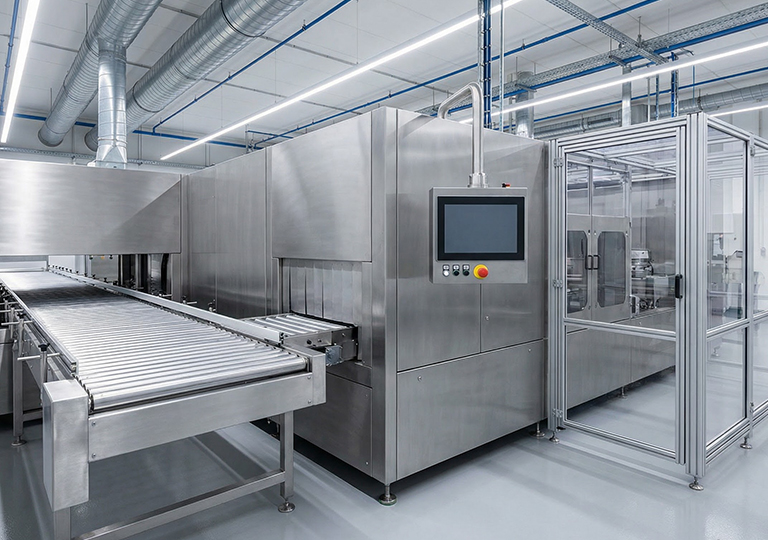
The Rise of Complex Industrial and Structural Applications
Projects Are Getting Bigger and Smarter
Modern projects are no longer isolated components. They are integrated systems.
Examples include:
- Large-span infrastructure frameworks
- Modular industrial plants
- Solar and wind energy structures
- Automated manufacturing lines
- Heavy-duty transportation systems
Each system requires aluminium profiles that:
- Perform multiple functions simultaneously
- Maintain structural integrity
- Enable faster assembly
- Reduce total system weight
Standard profiles simply cannot meet these requirements efficiently.
Why Complexity Is Increasing
Complexity is driven by:
- Space optimization
- Load distribution requirements
- Speed of installation
- Lifecycle cost reduction
Custom aluminium extrusion allows designers to build complexity into the profile, instead of adding complexity during assembly.
What Makes Custom Aluminium Extrusion Different
Beyond Standard Shapes
Standard aluminium profiles are designed for general use.
Custom profiles are engineered for specific applications.
Custom extrusion enables:
- Integrated fastening channels
- Internal cavities for wiring or drainage
- Reinforced load-bearing zones
- Reduced part count
This approach improves performance while simplifying downstream processes.
Design Freedom Without Structural Compromise
Aluminium extrusion allows complex cross-sections that would be difficult or impossible with other materials.
Custom profiles can combine:
- Structural strength
- Functional integration
- Aesthetic requirements
All within a single, continuous profile.
The Custom Aluminium Extrusion Development Process
Step 1: Application and Requirement Analysis
Custom extrusion begins with understanding:
- Load conditions
- Environmental exposure
- Installation method
- Tolerance requirements
- Surface finish expectations
This phase ensures the profile is engineered for real operating conditions, not theoretical assumptions.
Step 2: Profile Design and Engineering
Engineers design profiles considering:
- Section modulus and strength
- Wall thickness optimization
- Metal flow behavior
- Weight reduction opportunities
The goal is to achieve maximum performance with minimum material.
Step 3: Die Design and Tooling Strategy
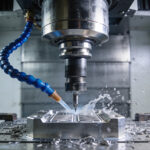
Custom profiles require precision die engineering.
Die design must account for:
- Balanced metal flow
- Hollow section complexity
- Bearing length variation
- Extrusion speed stability
In-house die manufacturing enables faster iterations and higher consistency.
Step 4: Prototyping and Validation
Before full-scale production:
- Trial extrusions validate design assumptions
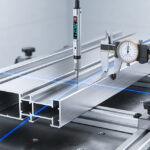
- Dimensions, surface finish, and straightness are checked
- Mechanical properties are verified
This reduces risk before mass production.
Step 5: Production and Quality Assurance
Once validated, production focuses on:
- Process repeatability
- Tight tolerance control
- Batch consistency
Quality assurance ensures profiles meet functional and structural requirements.
Key Benefits of Custom Aluminium Extrusion
Structural Efficiency
Custom profiles allow:
- Optimized load paths
- Reduced weight without compromising strength
- Better stress distribution
This is critical for infrastructure and heavy engineering applications.
Reduced Assembly Time and Cost
By integrating features into the profile:
- Fewer components are required
- Assembly becomes faster
- Error potential is reduced
This directly impacts project timelines and labor costs.
Improved Lifecycle Performance
Custom extrusions improve:
- Corrosion resistance through optimized geometry
- Fatigue performance
- Long-term dimensional stability
This reduces maintenance and replacement costs.
Industry Applications Where Custom Extrusion Delivers Maximum Value
Infrastructure and Construction
Custom aluminium profiles are used in:
- Structural frameworks
- Curtain wall and façade systems
- Bridges and walkways
They enable faster installation and cleaner design.
Renewable Energy
Solar and wind systems benefit from:
- Lightweight structural members
- Integrated mounting features
- Corrosion-resistant profiles
Custom extrusions improve efficiency and durability.
Transportation and Mobility
Railways, EV platforms, and logistics systems use custom profiles for:
- Weight reduction
- Structural integration
- Improved crash performance
Precision is critical in these applications.
Industrial Machinery and Automation
Custom aluminium profiles support:
- Machine frames
- Conveyor systems
- Automation lines
They enable modular, scalable designs.
Defence and Specialized Applications
Defence and high-spec applications require:
- Tight tolerances
- High structural reliability
- Consistent repeatability
Custom extrusion ensures compliance with strict performance criteria.
Why Custom Extrusion Requires the Right Manufacturing Partner
Not all extrusion suppliers can deliver true custom solutions.
Key capabilities include:
- Strong engineering support
- In-house die manufacturing
- Advanced extrusion press capability
- Robust quality control systems
Without these, custom profiles become inconsistent, delayed, or costly.
Buyer Evaluation Checklist for Custom Aluminium Extrusion Partners
Before selecting a partner, buyers should evaluate:
- Experience with complex profile designs
- Ability to support design optimization
- Die engineering and correction capability
- Track record in similar applications
- Quality documentation and testing
A capable partner adds engineering value, not just production output.
How Surat Aluminium Delivers Custom Extrusion Solutions
Surat Aluminium approaches custom aluminium extrusion as an engineering collaboration, not a transactional process.
The focus is on:
- Application-specific profile development
- Precision die engineering
- Consistent extrusion quality
- Reliable performance across industrial and structural use cases
This enables the delivery of custom profiles that meet:
- Structural requirements
- Installation efficiency goals
- Long-term performance expectations
The result is aluminium solutions designed to perform in real-world conditions.
Strategic Insight: Custom Profiles Reduce Total System Cost
While custom extrusions may have higher initial tooling costs, they reduce:
- Assembly complexity
- Labor requirements
- Material waste
- Long-term maintenance
For large projects, custom profiles often deliver lower total project cost and higher reliability.
Conclusion: Custom Aluminium Extrusion Is the Future of Engineering Design
In 2026, engineering success depends on how well materials are adapted to application needs.
Custom aluminium extrusion offers:
- Design freedom
- Structural efficiency
- Operational reliability
It transforms aluminium from a generic material into a purpose-built engineering solution.
For industries facing increasing complexity, custom extrusions are not an option. They are the competitive edge.