

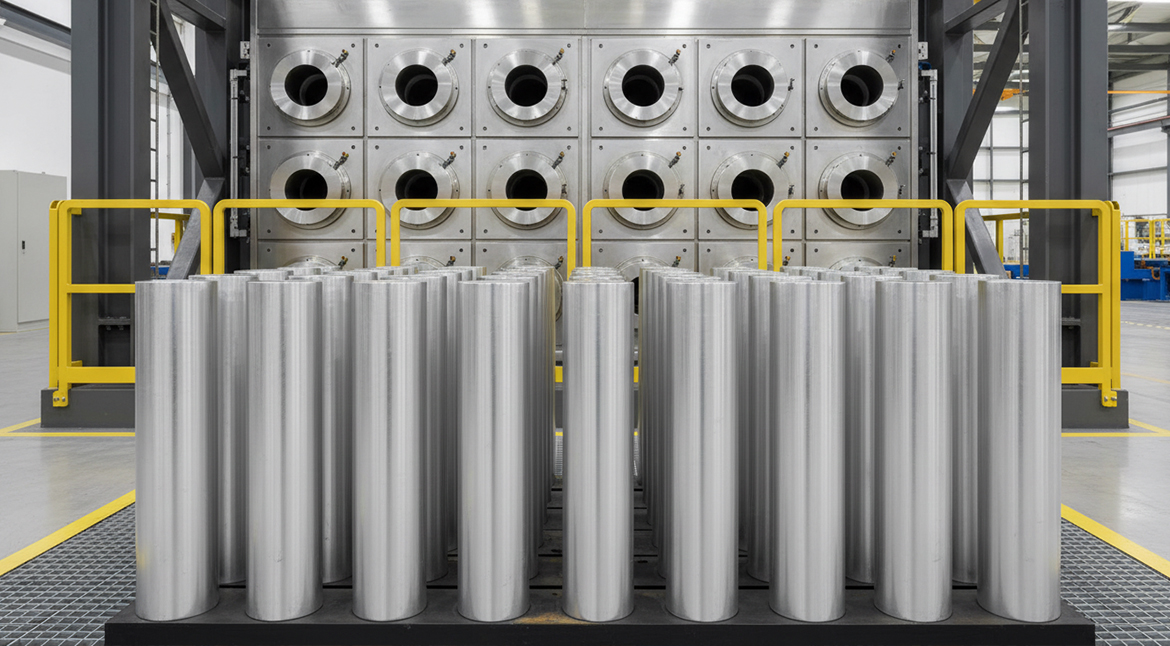
Introduction: Strength and Surface Are Decided Before Extrusion Begins
In aluminium extrusion, strength and surface finish are often judged at the end of the line.
In reality, both are largely predetermined at the billet casting stage.
By 2026, extrusion profiles are expected to deliver:
- Higher structural strength
- Cleaner, defect-free surfaces
- Consistent performance across long production runs
When billets lack metallurgical integrity, even the most advanced presses, dies, and process controls cannot fully compensate.
This blog explains:
- How billet quality directly affects extrusion strength
- Why surface finish issues often originate in billet casting
- The metallurgical mechanisms behind these outcomes
- What quality parameters truly matter in billet production
- How buyers can assess billet quality indirectly through extrusion results
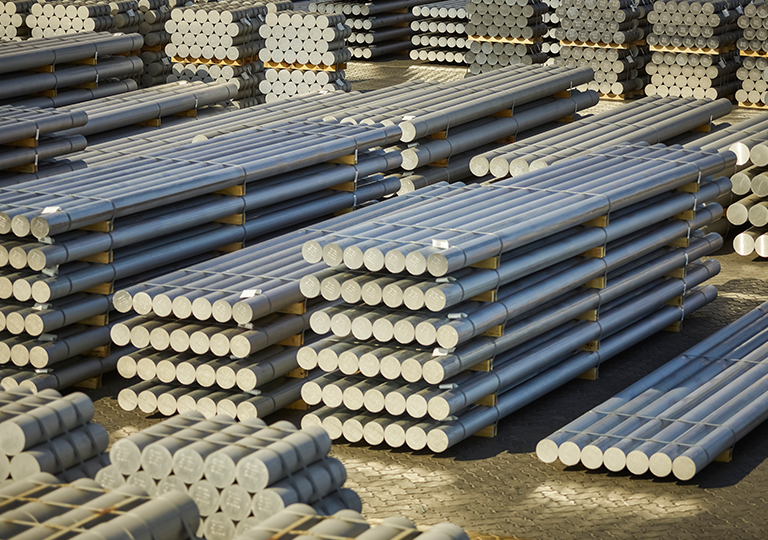
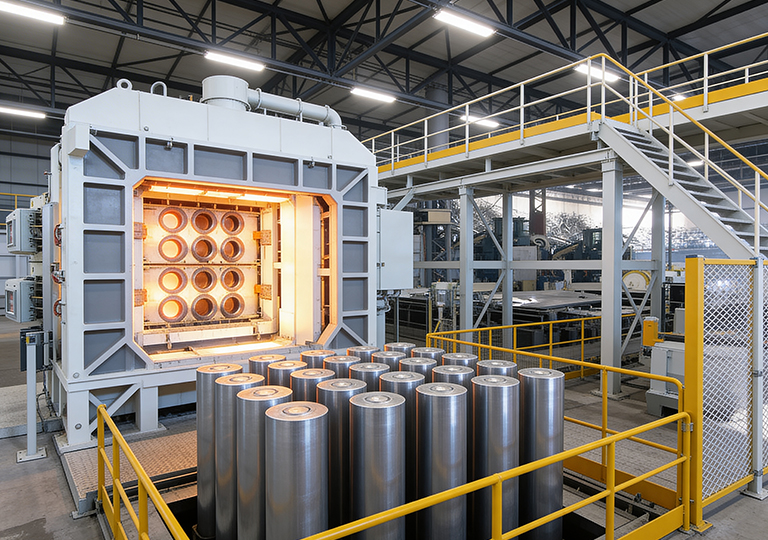
Understanding the Billet – Extrusion Relationship
Why Billets Control Extrusion Outcomes
An aluminium billet is the raw material memory of the extrusion process.
Its internal structure, cleanliness, and chemical uniformity influence how metal behaves under pressure.
Key billet characteristics affecting extrusion include:
- Grain size and uniformity
- Alloy homogeneity
- Inclusion content
- Hydrogen levels
These factors directly translate into mechanical strength and surface appearance.
Why the Impact Is Greater in 2026
Modern extrusion trends amplify billet influence due to:
- Higher extrusion speeds
- Wider and thicker profiles
- Tighter tolerances
- More demanding surface treatments
As process margins shrink, billet imperfections become more visible and more costly.
How Billet Quality Influences Extrusion Strength
Grain Structure and Mechanical Performance
Fine, uniform grain structure in billets leads to:
- Better load distribution
- Higher and more consistent tensile strength
- Improved fatigue resistance
Coarse or uneven grains cause:
- Localized weakness
- Variable mechanical properties
- Reduced reliability in structural applications
Grain refinement during billet casting and homogenization is therefore critical.
Alloy Homogeneity and Strength Consistency
High-quality billet casting ensures:
- Even distribution of alloying elements
- Elimination of segregation zones
When alloy chemistry varies within the billet:
- Strength fluctuates along the profile
- Heat treatment response becomes inconsistent
- Quality certification becomes difficult
Uniform chemistry ensures predictable strength after extrusion and aging.
Reduction of Internal Defects
Defects such as:
- Porosity
- Shrinkage cavities
- Oxide inclusions
act as stress concentrators.
Even if invisible externally, they reduce:
- Load-bearing capacity
- Fatigue life
- Impact resistance
High-quality billet casting minimizes these defects at the source.
How Billet Quality Determines Surface Finish
Surface Finish Starts Inside the Metal
Many surface defects seen after extrusion are symptoms of billet-related issues, not die or press problems.
Billet-related causes of poor surface finish include:
- Oxide inclusions
- Contaminated melt
- Improper homogenization
These defects manifest as streaks, lines, or surface roughness on extruded profiles.
Clean Metal Flow and Surface Smoothness
High-quality billets enable:
- Stable metal flow through the die
- Reduced friction at bearing surfaces
- Lower risk of pick-up
This results in:
- Cleaner extrusion surfaces
- Better anodizing and coating performance
- Lower surface rejection rates
Surface quality is a direct reflection of billet cleanliness.
The Role of Homogenization in Strength and Surface Quality
Why Homogenization Is Non-Negotiable
Homogenization heat treatment:
- Equalizes alloy composition
- Dissolves brittle phases
- Improves extrudability
Without proper homogenization:
- Surface tearing risk increases
- Mechanical properties become inconsistent
- Extrusion pressure becomes unstable
In 2026, homogenization quality is a baseline expectation.
Homogenization and Die Life
Well-homogenized billets:
- Extrude at lower, more stable pressures
- Reduce die wear and pick-up
- Improve surface finish consistency
This indirectly improves tooling life and process reliability.
Billet Quality and High-Speed Extrusion
Supporting Productivity Without Quality Loss
High-quality billets allow:
- Higher extrusion speeds
- Stable temperature control
- Reduced surface tearing
Poor billet quality forces:
- Speed reduction
- Increased scrap
- Frequent process interruptions
Billet quality directly impacts throughput and delivery timelines.
Impact on Heat Treatment and Final Properties
Uniform Aging Response
Billets with consistent chemistry and microstructure ensure:
- Uniform response to aging
- Stable mechanical properties across the profile
Inconsistent billets lead to:
- Hardness variation
- Certification challenges
- Performance uncertainty
This is critical for structural and OEM applications.
Buyer Perspective: How to Recognize Billet Quality Through Extrusion Results
While buyers may not see billets directly, billet quality is reflected in:
- Consistent surface finish across batches
- Stable mechanical test results
- Minimal dimensional variation
- Low rejection and rework rates
Persistent surface or strength issues often trace back to billet quality.
Questions Buyers Should Ask About Billet Quality
In 2026, informed buyers ask:
- How is alloy chemistry controlled during casting?
- What homogenization practices are followed?
- How are inclusions and hydrogen controlled?
- Is billet casting integrated with extrusion operations?
Suppliers with strong billet control provide more predictable outcomes.
How Surat Aluminium Ensures Strength and Surface Consistency Through Billet Quality
Surat Aluminium treats billet quality as a strategic performance driver, not a background process.
The focus includes:
- Controlled alloy preparation
- Effective melt treatment and degassing
- Consistent homogenization practices
- Close alignment between billet casting and extrusion teams
This ensures:
- Stable extrusion strength
- Clean surface finish
- Reliable performance across complex and large profiles
Such integration is essential for demanding infrastructure and industrial applications.
Strategic Insight: Billet Quality Protects Brand and Project Outcomes
High-quality billet casting reduces:
- Surface-related customer complaints
- Mechanical performance disputes
- Project delays and rejections
For manufacturers and buyers alike, billet quality protects reputation, timelines, and cost control.
Conclusion: Strength and Surface Are Cast, Not Created
In modern aluminium extrusion, strength and surface finish are not added later.
They are cast into the billet.
By 2026, billet quality has become a defining factor in:
- Extrusion reliability
- Mechanical performance
- Aesthetic and functional surface quality
Buyers who understand this choose extrusion partners that control billet quality with discipline and transparency.
High-quality billets are not just raw material. They are the foundation of trustworthy aluminium performance.