
Introduction: Why Die Design Is the Silent Performance Multiplier
In aluminium extrusion, speed, consistency, and profile life are often discussed as separate outcomes.
In reality, all three are governed by one core factor: advanced die design.
By 2026, extrusion presses have become more powerful, billets more consistent, and automation more widespread. Yet, without a well-engineered die, even the most advanced extrusion line fails to deliver predictable results.
Advanced die design is no longer about “making the shape.”
It is about controlling metal behavior under extreme pressure, over long production runs, while maintaining surface quality, tight tolerances, and die longevity.
This blog explains:
- How die design directly impacts extrusion speed
- Why consistency across batches depends on die engineering
- How profile life and performance are influenced at the die level
- What separates basic die design from advanced die design
- What buyers should evaluate when assessing a supplier’s die capability
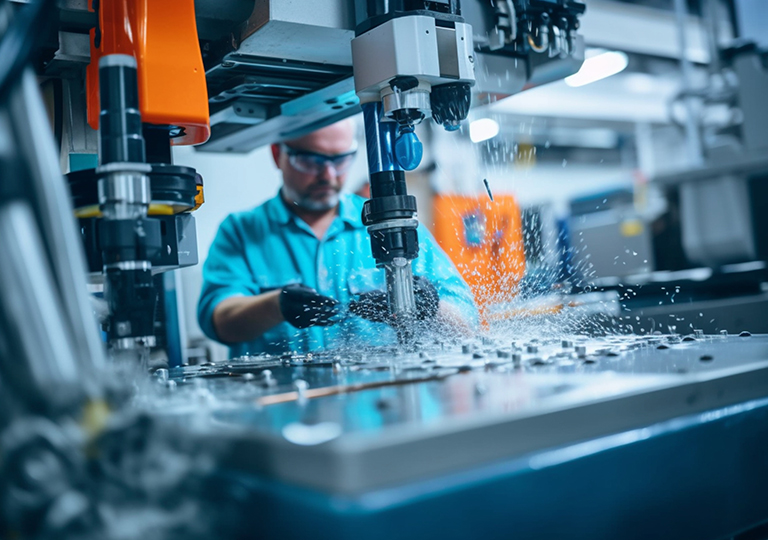
Understanding Advanced Die Design in Modern Extrusion
Beyond Geometry: Designing for Metal Flow
Traditional die design focused primarily on profile geometry.
Advanced die design focuses on metal flow control.
Key considerations include:
- Uniform velocity distribution across the profile
- Balanced pressure zones
- Controlled deformation paths
- Thermal behavior during extrusion
The goal is to ensure aluminium flows predictably and evenly, regardless of profile complexity.
Why Metal Flow Balance Matters
Unbalanced metal flow leads to:
- Dimensional variation
- Surface defects
- Profile twisting or bowing
- Increased die wear
Advanced die design eliminates these issues at the source, reducing downstream correction and quality risk.
How Advanced Die Design Increases Extrusion Speed
Speed Without Instability
Higher extrusion speed improves productivity, but it also increases:
- Thermal stress
- Friction
- Risk of surface defects
Advanced die design enables higher speeds by:
- Optimizing bearing lengths
- Reducing unnecessary resistance
- Controlling temperature rise
This allows presses to operate closer to optimal capacity without sacrificing quality.
Stable Flow at Higher Throughput
When metal flow is balanced:
- Pressure fluctuations are minimized
- Surface tearing risk is reduced
- Weld seam integrity improves in hollow profiles
As a result, extrusion speed can be increased safely and consistently.
Consistency: The True Measure of Die Engineering Quality
Why Consistency Matters More Than Peak Performance
Buyers value:
- Repeatable dimensions
- Predictable surface finish
- Batch-to-batch uniformity
A die that performs well only during trials but drifts during production is a liability.
Advanced die design ensures:
- Stable performance over long runs
- Minimal dimensional drift
- Reduced need for frequent adjustments
Controlling Variation Through Bearing Optimization
Bearing length variation is a critical tool in advanced die design.
Proper bearing optimization:
- Equalizes metal velocity
- Controls wall thickness
- Maintains symmetry
Poor bearing design causes localized flow imbalance that worsens over time.
Impact of Advanced Die Design on Profile Life
What Is Profile Life?
Profile life refers to:
- The ability of an extruded section to maintain dimensional stability
- Mechanical performance over its service life
- Resistance to deformation under load and environmental stress
Profile life begins at the die.
Internal Stress and Long-Term Performance
Advanced die design reduces:
- Residual internal stress
- Uneven grain structure
- Localized weakness
This improves:
- Fatigue resistance
- Structural reliability
- Long-term dimensional stability
For infrastructure, mobility, and industrial applications, this is critical.
Advanced Die Design for Complex and Large Profiles
Managing Complexity Without Compromising Quality
Large and complex profiles amplify:
- Flow imbalance
- Thermal gradients
- Stress concentration
Advanced die design addresses these challenges through:
- Multi-zone flow control
- Reinforced die architecture
- Mandrel and bridge stability in hollow dies
This ensures complex profiles remain consistent and extrusion-ready.
Supporting Wider and Thicker Sections
As profile size increases, die strength and stability become decisive.
Advanced die design:
- Distributes stress evenly across die components
- Prevents deformation under high load
- Extends die service life
This directly impacts productivity and quality reliability.
Die Design and Surface Finish Quality
Relationship Between Die Surface and Profile Surface
Surface finish issues often originate inside the die.
Advanced die finishing:
- Reduces friction
- Prevents pick-up
- Minimizes die lines
This results in:
- Cleaner extrusion surface
- Better anodizing and coating results
- Lower rejection rates
Thermal Control and Surface Stability
Advanced die design also manages:
- Heat generation at bearing surfaces
- Temperature uniformity across the profile
Stable thermal behavior improves surface consistency, especially at higher speeds.
Advanced Die Design and Die Life
Extending Die Service Life
Advanced die design reduces:
- Uneven wear
- Localized overheating
- Stress concentration
This extends:
- Time between corrections
- Total die life
- Production uptime
Longer die life reduces tooling cost per kg of extrusion.
Predictable Maintenance Cycles
Well-designed dies allow:
- Planned maintenance
- Predictable correction intervals
- Reduced emergency stoppages
This improves delivery reliability for long-term projects.
Buyer Perspective: Why Advanced Die Design Lowers Total Cost
While advanced die design requires:
- Higher engineering effort
- Precision machining
- Deeper process knowledge
It reduces:
- Scrap and rework
- Quality disputes
- Project delays
- Downstream assembly issues
For buyers, this results in lower total cost of ownership, not just better profiles.
What Buyers Should Ask About Die Design Capability
Key evaluation questions include:
- Is die design handled in-house?
- How is metal flow balanced for complex profiles?
- How is bearing design optimized?
- What is the typical die life for similar profiles?
- How quickly can dies be corrected if required?
These questions reveal whether a supplier truly practices advanced die design.
How Surat Aluminium Applies Advanced Die Design Principles
Surat Aluminium approaches die design as an engineering discipline, tightly integrated with extrusion operations.
The focus includes:
- Flow-balanced die engineering
- Bearing optimization for speed and consistency
- Design strategies aligned with profile application
- Continuous feedback between die shop and production
This enables:
- Higher extrusion efficiency
- Stable dimensional accuracy
- Longer profile and die life
Such integration ensures aluminium profiles that perform reliably from first batch to last.
Strategic Insight: Advanced Die Design Is a Competitive Differentiator
In 2026, aluminium extrusion competitiveness is not defined by press tonnage alone.
It is defined by:
- How fast profiles can be extruded without defects
- How consistently dimensions are maintained
- How long profiles perform in real applications
All three are determined at the die design stage.
Conclusion: Advanced Die Design Turns Capability into Reliability
Advanced die design transforms extrusion from a force-driven process into a controlled engineering system.
By improving:
- Extrusion speed
- Batch consistency
- Profile life
It enables manufacturers to deliver aluminium solutions that meet modern engineering expectations.
For buyers, selecting partners with advanced die design capability means choosing predictability, performance, and long-term value.