

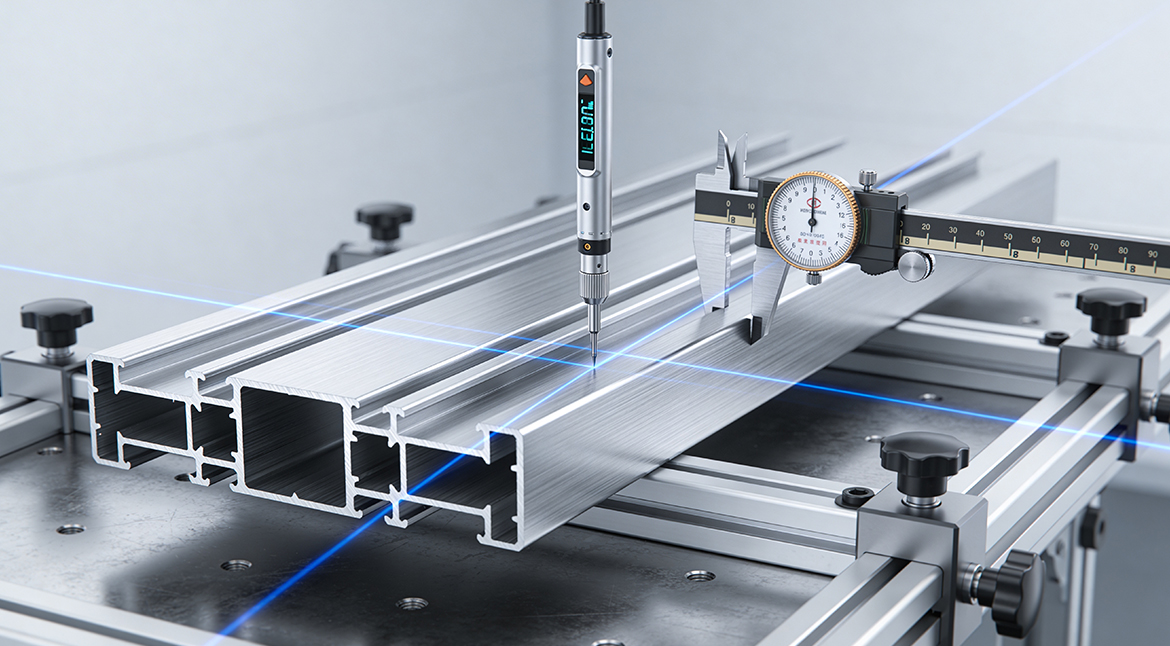
Introduction: Why Precision Has Become a Deal-Breaker in 2026
In aluminium extrusion, precision is no longer a premium feature.
By 2026, it is a baseline expectation.
Across infrastructure, renewable energy, transportation, defence, and industrial machinery, aluminium profiles are no longer treated as semi-finished products. They are engineering-critical components expected to fit, perform, and assemble without correction.
This makes three parameters decisive in supplier selection:
- Dimensional tolerances
- Surface finish quality
- Overall dimensional accuracy and repeatability
This blog explains what these terms really mean in modern extrusion, why they matter more than ever, how they are controlled during manufacturing, and what buyers should demand from aluminium extrusion partners in 2026.
What Are Tolerances in Aluminium Extrusion?
Defining Tolerances Simply
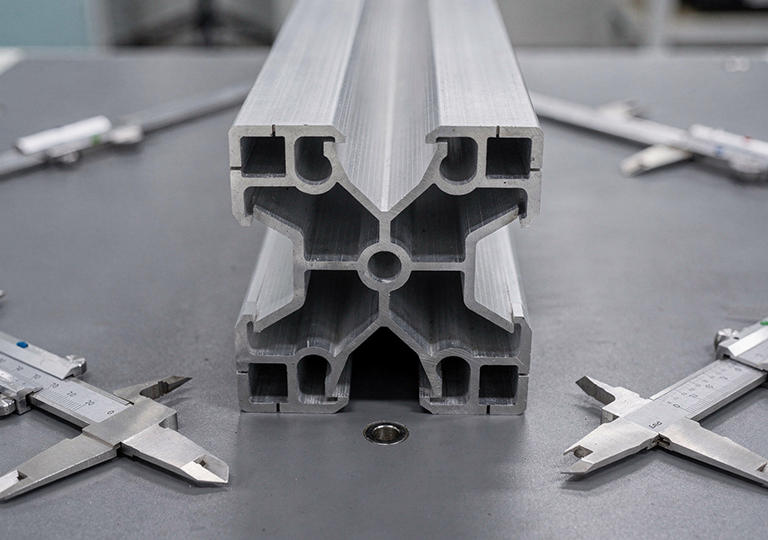
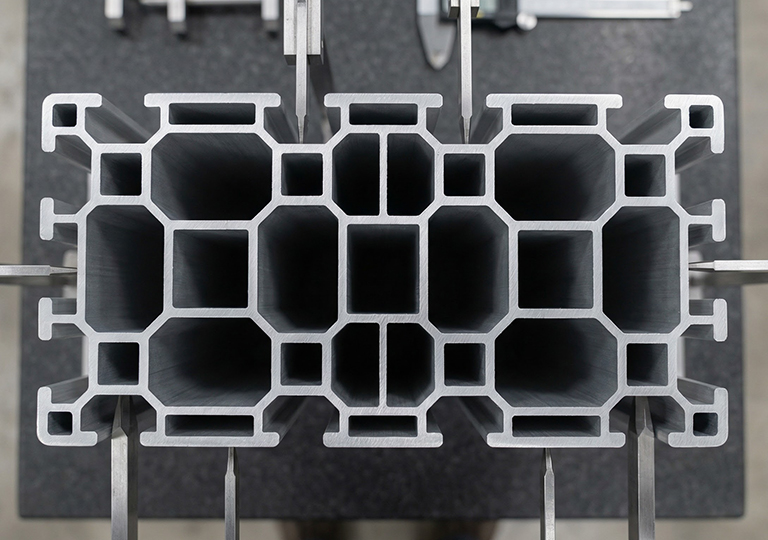
Tolerance refers to the permissible variation from a specified dimension.
No extrusion process can produce a perfectly exact dimension every time. Tolerances define the acceptable range within which a profile remains functionally correct.
For example:
- Width tolerance
- Wall thickness tolerance
- Straightness tolerance
- Twist and bow limits
The tighter the tolerance, the higher the requirement for process control, tooling precision, and inspection discipline.
Why Tolerances Matter More in 2026
Modern aluminium applications involve:
- Automated assembly lines
- Pre-fabricated systems
- Modular construction
- CNC machining and robotic welding
Loose tolerances lead to:
- Assembly mismatch
- Excessive shimming or rework
- Reduced structural integrity
- Higher installation costs
In large projects, even minor deviations multiply into major delays.
Types of Tolerances Buyers Must Understand
Dimensional Tolerances
These include:
- Width and height variation
- Wall thickness consistency
- Internal cavity dimensions in hollow profiles
Critical for:
- Structural load distribution
- Fitment with mating components
- Machining accuracy
Straightness, Twist, and Bow
Long aluminium profiles are prone to:
- Bowing
- Twisting
- Residual stress deformation
Modern applications demand:
- Controlled straightness over long lengths
- Minimal twist to support precise installation
Stretching and post-extrusion handling play a major role here.
Cut-Length Accuracy
In 2026, buyers increasingly demand:
- Millimeter-level cut-length precision
- Consistency across batches
Accurate cut-length reduces:
- On-site cutting
- Material wastage
- Assembly time
Surface Finish: More Than Just Appearance
What Surface Finish Really Represents
Surface finish reflects:
- Extrusion stability
- Die quality
- Billet cleanliness
- Process discipline
A poor surface finish often indicates deeper process issues, not just cosmetic defects.
Common Surface Defects and Their Causes
| Defect | Typical Cause |
| Die lines | Die wear or improper bearing design |
| Streaks | Billet contamination or uneven flow |
| Pick-up | Excessive friction or lubrication failure |
| Surface tearing | Incorrect billet temperature |
Understanding these defects helps buyers evaluate manufacturing maturity.
Functional Importance of Surface Finish
Surface finish directly impacts:
- Anodizing and coating quality
- Corrosion resistance
- Fatigue performance
- Aesthetic appeal in architectural applications
Poor surface quality increases downstream rejection risk.
Dimensional Accuracy: The Outcome of the Entire Process
Accuracy vs Tolerance
Tolerance defines the allowed range.
Accuracy defines how consistently the profile stays within that range.
Two suppliers may claim the same tolerance limits, but:
- One delivers consistent accuracy
- The other produces wide variation within limits
Accuracy is what separates reliable partners from average suppliers.
What Determines Dimensional Accuracy
Dimensional accuracy depends on:
- Billet quality and homogenization
- Die design and machining precision
- Extrusion press stability
- Cooling and quenching control
- Stretching and straightening discipline
Accuracy is a system outcome, not a single-step result.
Process Controls That Enable Tight Tolerances
Advanced Die Engineering
Modern dies are designed with:
- Optimized bearing lengths
- Balanced metal flow paths
- Precision machining
In-house die manufacturing allows faster correction and better consistency.
Press Stability and Control
High-quality extrusion presses provide:
- Stable ram speed
- Uniform pressure distribution
- Controlled metal flow
Press instability is a primary cause of dimensional variation.
Controlled Cooling and Stretching
Uneven cooling causes:
- Internal stress
- Warping and distortion
Precision stretching:
- Relieves stress
- Improves straightness
- Locks in dimensional stability
Quality Inspection and Measurement in 2026
Modern Measurement Techniques
Leading extrusion plants use:
- Digital calipers and gauges
- Profile scanners
- Statistical process control (SPC)
This ensures early detection of variation before defects scale.
Batch-to-Batch Consistency
Buyers increasingly value:
- Repeatability across production lots
- Predictable performance over time
This is especially important for:
- Large infrastructure projects
- Long-term supply contracts
- Export applications
Industry-Specific Precision Expectations
Infrastructure and Construction
Requires:
- Straightness over long lengths
- Consistent mating dimensions
- Reliable surface finish
Precision directly impacts installation speed.
Renewable Energy
Solar and wind structures demand:
- Tight tolerances for alignment
- Corrosion-resistant finishes
- Long lifecycle stability
Even minor deviations affect system performance.
Transportation and Industrial Machinery
These sectors demand:
- High dimensional accuracy
- Tight tolerance control
- Machining-ready extrusions
Precision affects safety, efficiency, and durability.
What Buyers Should Ask Their Extrusion Supplier
Before finalizing a supplier, buyers should evaluate:
- What tolerance standards are followed
- How dimensional accuracy is measured
- In-house die manufacturing capability
- Stretching and straightening process control
- Quality documentation and inspection reports
These questions reveal true manufacturing maturity.
How Surat Aluminium Maintains Precision Standards
Surat Aluminium focuses on:
- Controlled extrusion parameters
- Precision die engineering
- Robust stretching and cut-length control
- Consistent quality inspection protocols
This approach ensures:
- Reliable tolerances
- Stable surface finish
- Dimensional accuracy across batches
Such discipline supports applications where fit, performance, and reliability are critical.
Procurement Insight: Precision Reduces Total Project Cost
While tight tolerances may appear costlier upfront, they reduce:
- On-site rework
- Assembly delays
- Rejection and scrap
- Maintenance issues
Precision manufacturing lowers total cost of ownership, not just component price.
Conclusion: Precision Is the New Competitive Benchmark
In 2026, aluminium extrusion quality is judged not by how much is produced, but by how precisely it is produced.
Tolerances, surface finish, and dimensional accuracy define:
- Project success
- Installation efficiency
- Long-term performance
Buyers who prioritize precision choose partners, not just suppliers.
Modern extrusion is about engineering certainty, and precision is its strongest signal.
